



Objectives
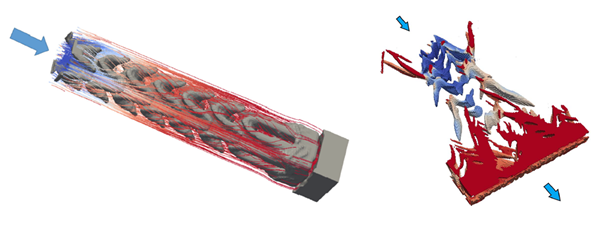
The main objective of this research project is to establish a framework for designing the next generation of enhanced heat transfer with scientifically-validated procedures and verified potential benefits. Moreover, within this context, this project is intended to strengthen the national research network of heat transfer specialists and create the needed multidisciplinary connections that are needed for the further development of their field of study.
With this aim, the Consortium between UNIPR, POLIMI, UNIPD and UNISALENTO groups three units with deep expertise on heat transfer mechanisms, both theoretical and experimental, and a unit expert in functional and topological optimization and advanced manufacturing techniques to work on this topic.
Considering the current technological scenario in the field, in fact, two potentially disruptive technologies have been emerging in the last ten years. On one hand, topology optimization has begun to shape components with the aim of optimal performance, on the other, AM techniques have allowed more geometrical freedom for many parts, allowing components with unprecedented shapes.
Those techniques can work synergically, and the field of enhanced heat transfer, which has reached an evolutionary plateau, has now the opportunity to evolve. Such opportunity is testified the amount of international funded projects on the topic, e.g. by the Advanced Research Project Agency – Energy (ARPA-E), which already sponsored with several million US dollars universities and companies.
To reach the main objective, the following sub-goals have to be reached within this project:
- The design of a set of at least three geometries with optimized morphology for heat transfer enhancement in pipes and three in narrow channels.
- The design of a set of at least two morphologically enhanced geometries for heat transfer enhancement during condensation
- The experimental test of such geometries, in particular in terms of overall heat transfer enhancement, pressure drop, and other local quantities (e.g. local heat transfer enhancement, liquid film thickness), that highlight the physical mechanisms of thermal performance enhancement.
- The dissemination activity, which includes scientific publications, social network activity, and symposia with companies with potential interest in the technology.