



Summary
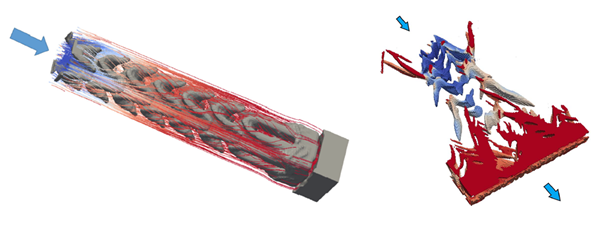
The ultimate aim of the present research project is to stimulate technological progress and innovation in an important sector for the national industry engaged in heat exchangers’ manufacturing. The challenges that these companies have to face to be competitive in the global market are driven by the push to realize more efficient devices from the thermal perspective but characterized by reduced pressure drop, volume, manufacturing and operating cost and high quality of the surface finishing for reducing fouling phenomena at the same time. A strategy that has been successfully explored in literature to achieve this goal consists in the use of emerging manufacturing technologies, that enable to produce surfaces with an optimized shape. This project can strengthen the national research network and create the multidisciplinary connections that are needed for the further development in this field of study. In fact, the cooperation between highly qualified researchers with specialized expertise in different experimental and numerical techniques, also under a complementary/interdisciplinary approach, represents a great opportunity for the whole research national community. Different problems/applications will be addressed by the four research units, encompassing single-phase and two-phase heat transfer. Different heat transfer enhancement passive techniques will be analyzed and optimized, e.g.:
- Insert devices and ribs of innovative and optimized shape to be adopted in channels during single-phase convection (UNIPR and POLIMI).
- Innovative solutions and emerging technologies for two-phase convection (UNIPD), such as novel enhanced surfaces to trigger surface tension effects for filmwise condensation.
The design and manufacturing of these innovative surfaces will be developed with the key contribution of UNISALENTO, that can guarantee the necessary experience for the smart design and manufacturing of these highly innovative components/surfaces, accounting for the constraints of each specific application.
This research will require a strict coordination between the four research units, in particular with regard to:
- the optimization activity, that requires the identification/discussion of the key objective parameters and the sharing of experience on both data processing and simulation approaches;
- the experimental activity that will be implemented and tuned for assessing the overall and local thermal performances of the different techniques/devices investigated.
With respect to previous studies, an added value in the present project is the major focus on the experimental approach, foreseen as both a primary approach for investigation (in deep synergy with computational fluid dynamics and optimization approaches) and a final tool to assess the results.